When I travelled around Australia in 2011, I missed going to Karijini National Park in Western Australia. Karijini NP is in the heart of the iron ore mining area of the Pilbara in North Western Australia…the source of much of Australia’s natural wealth.
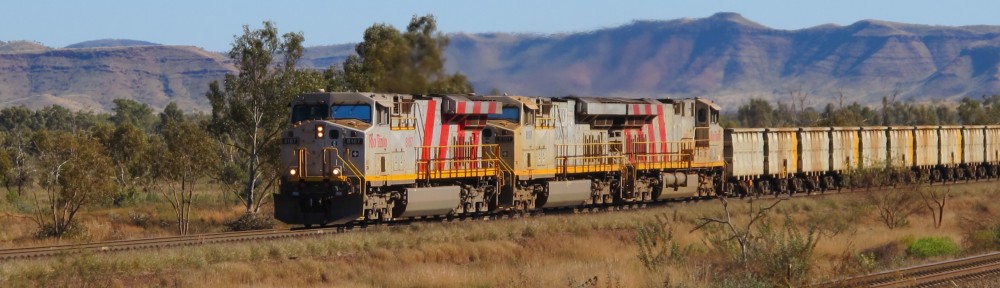
To digress briefly, The Pilbara is Rio Tinto and BHP country since these are the two biggest miners of iron ore in the area. To a large degree, the Pilbara was the saviour of Australia’s economy through the Global Financial Crisis. Iron ore has lost its “gloss” in recent times but it is still very important to Australia’s economy. The header photo captures the essence of the Pilbara…ancient landscape and a Rio Tinto iron ore train (typically 2 to 3 km long).
Since I missed Karijini in 2011, I planned to come back another day to see this part of WA. The opportunity to see Karijini finally came to pass in July 2014. Together with good friends Chris and Les, we travelled up the WA coast over 5 days (via Kalbarri, Coral Bay and Ningaloo) and then headed East through Pannawonica into the Pilbara…first to Millstream NP and then onto Karijini NP.
Millstream is associated with the Fortescue River which is a major watercourse during the wet season but intermittent in the dry season. The main attraction in Millstream is a crystal clear stream (separate from the Fortescue River) which rises from an aquifer close by. The aquifer is the outlet for water stored in the ancient banded ironstone formation of the Pilbara. The stream and small dam (created by past farmers), attract a wide range of birds. Otherwise, Millstream was a little uneventful.
Onto Karijini and the ancient Pilbara region…. Some rock formations in the Pilbara are about 3 billion years old which is “nearly” as old as planet earth which was formed about 4.5 billion years ago. The area was covered by a shallow sea for a long time. Early volcanic activity increased the iron content of the seawater significantly. Then with the emergence of the first oxygen producing bacteria in the form of stromatolites (and related species) in the shallows seas, the oxygen combined with the iron and formed iron oxide. The iron oxide combined with other materials (silica, etc), precipitated onto the sea floor and formed the structure of the banded ironstone of the Pilbara region over many eons. Subsequent folding activity and erosion resulted in spectacular geological features throughout the Pilbara as shown in the photos below.
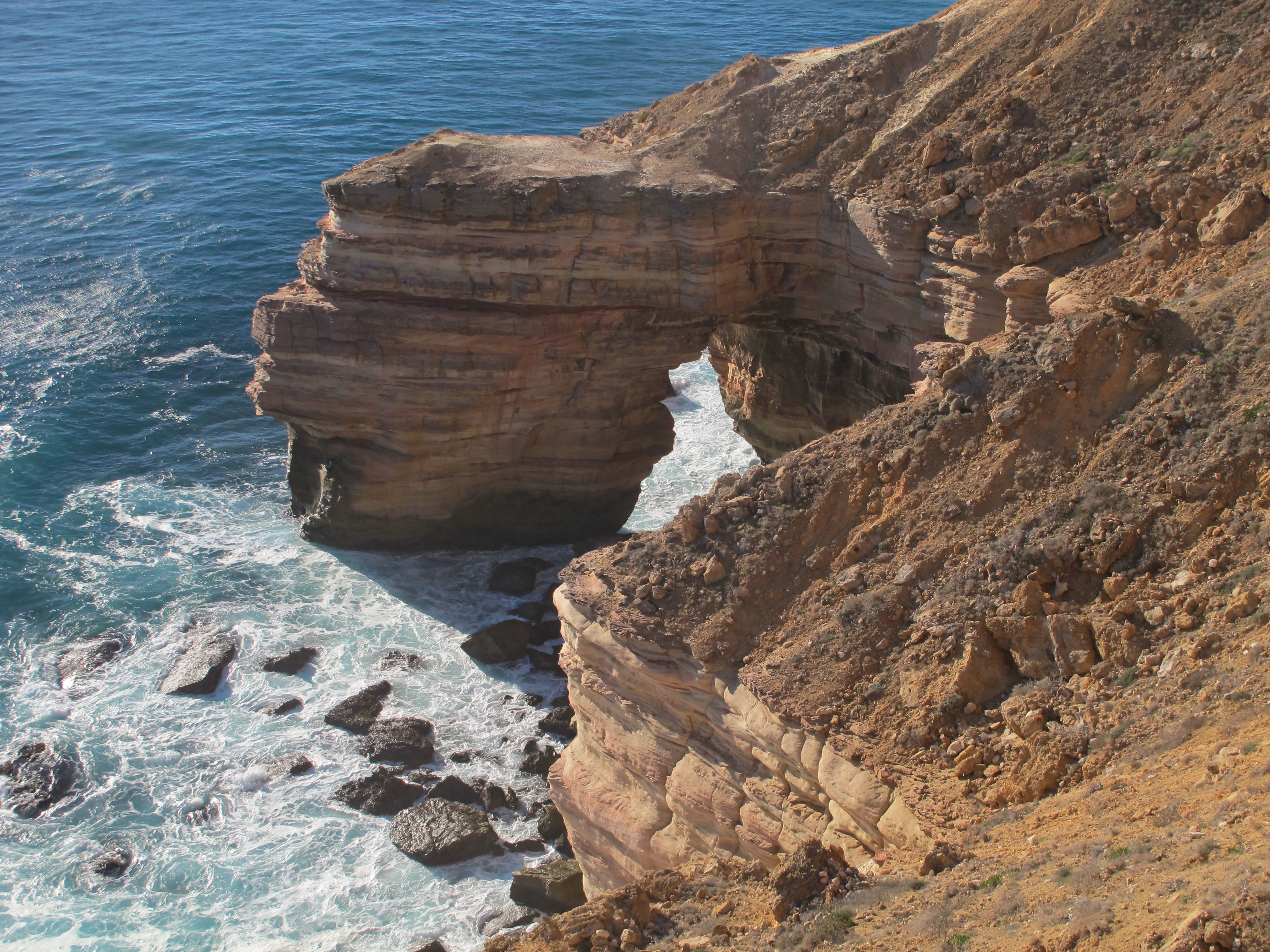
Natural Bridge in Kalbarri Coastal Park
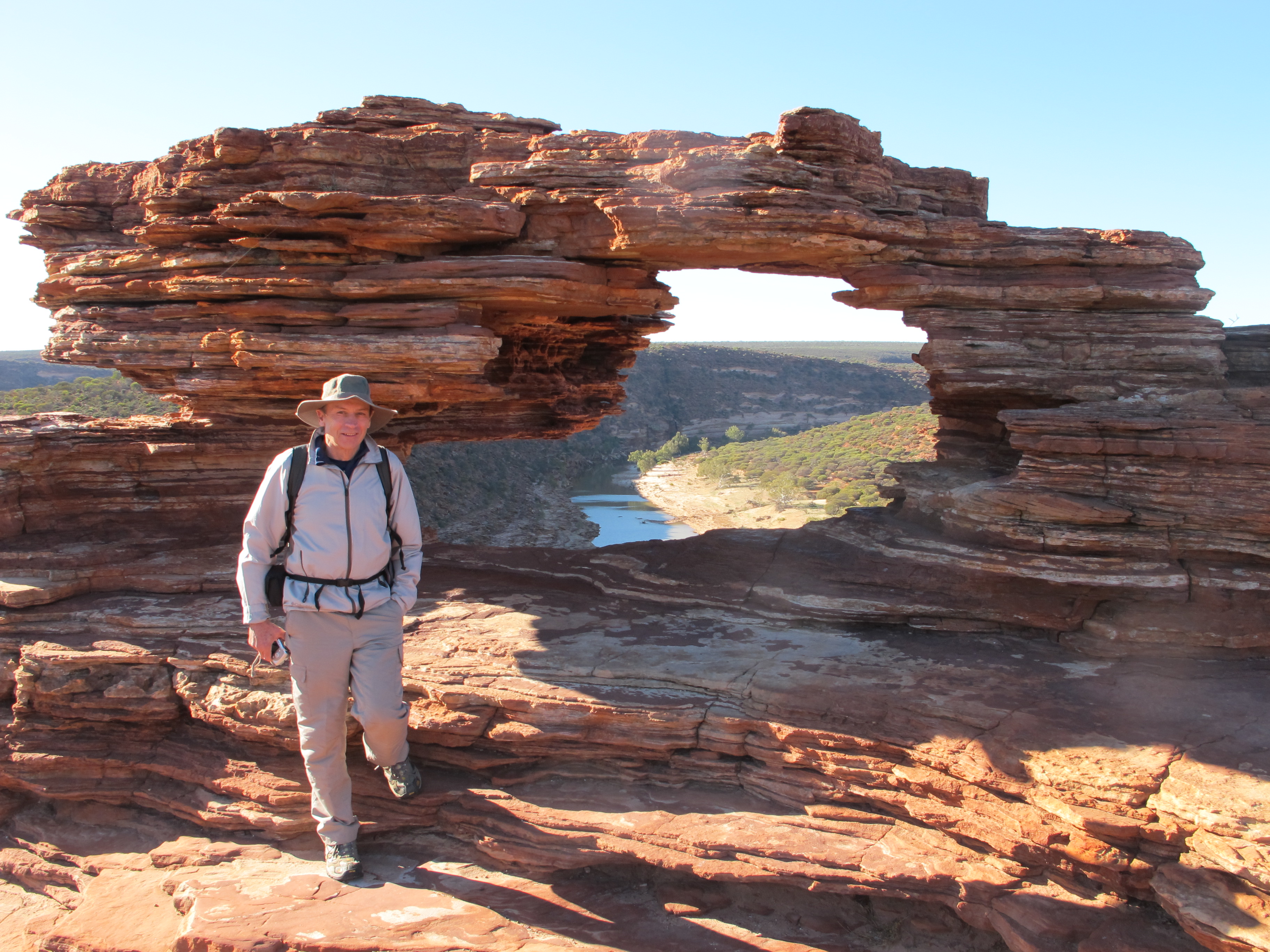
Rock window overlooking Kalbarri Gorge
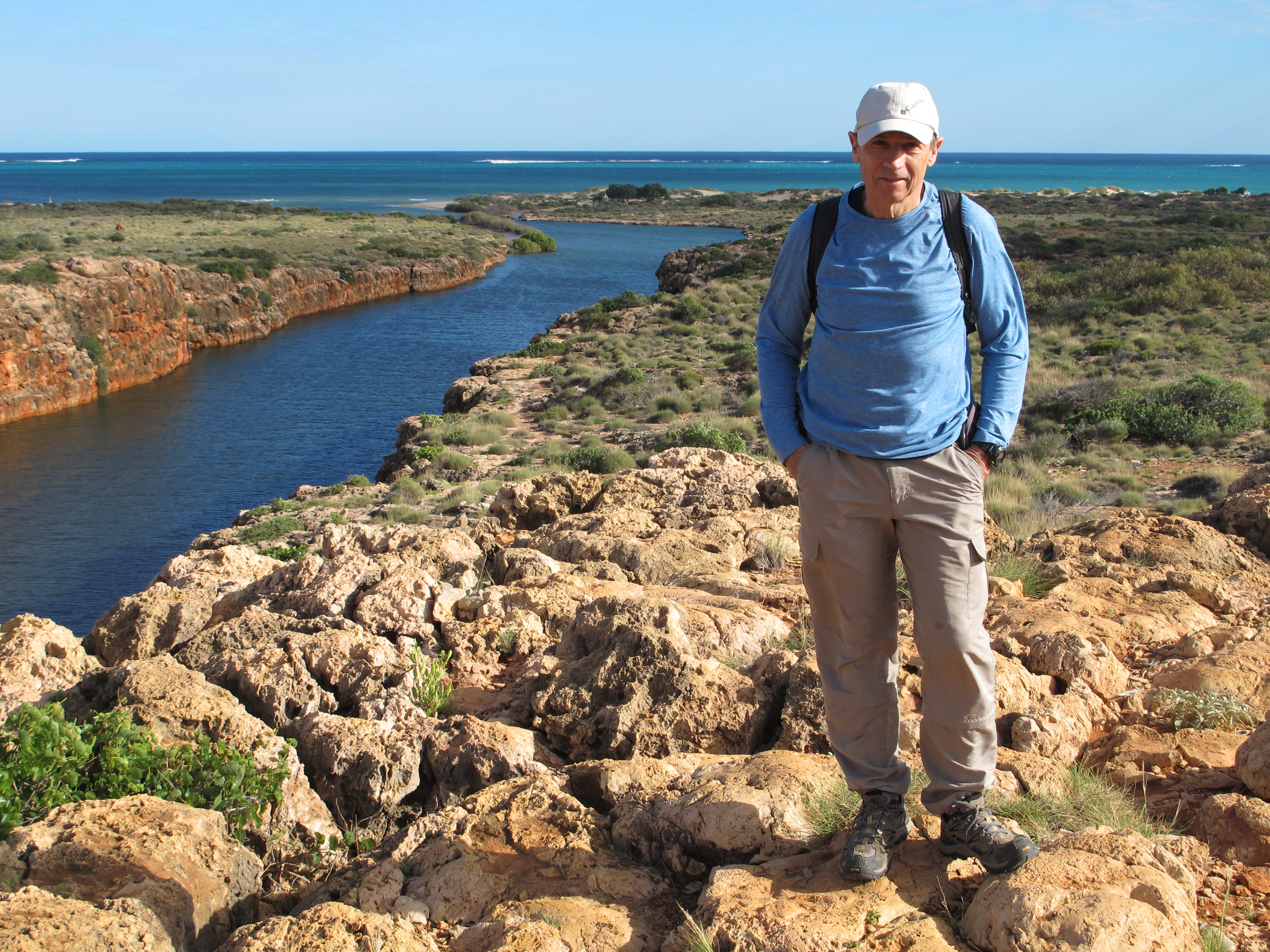
Yardie Creek with Ningaloo Reef in background
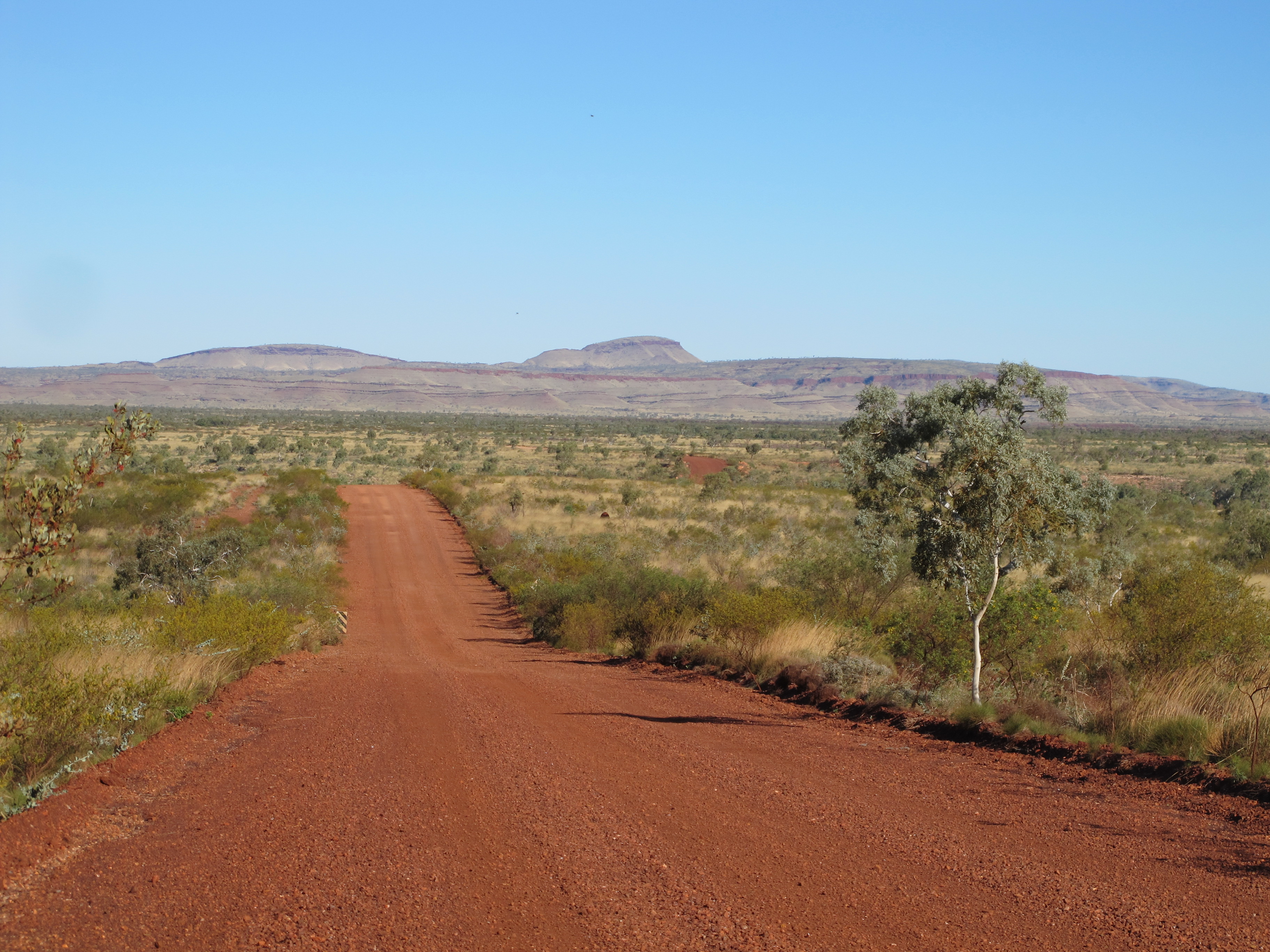
First view of the Pilbara with Hamersley Range in background
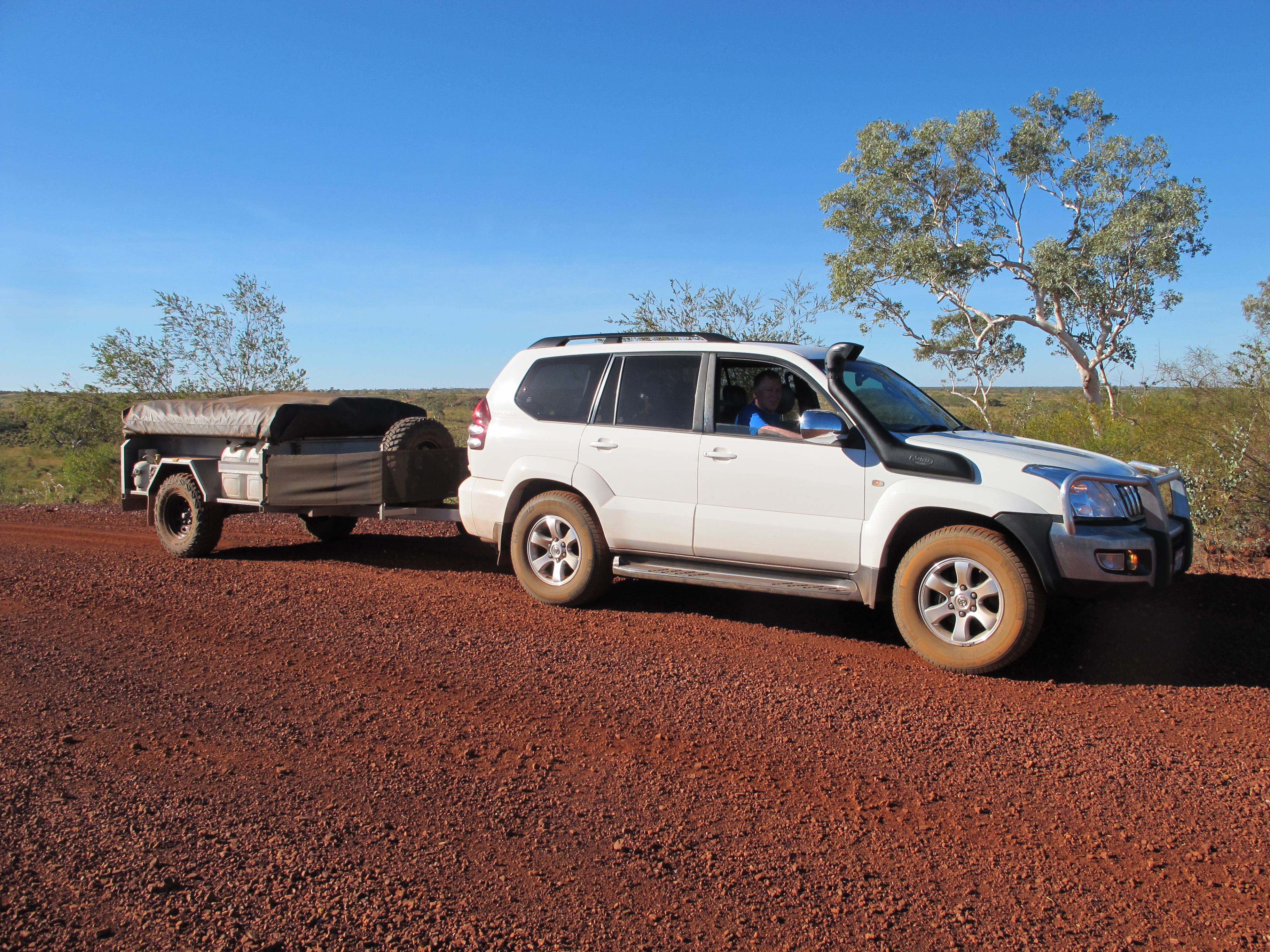
Our wheels and home..
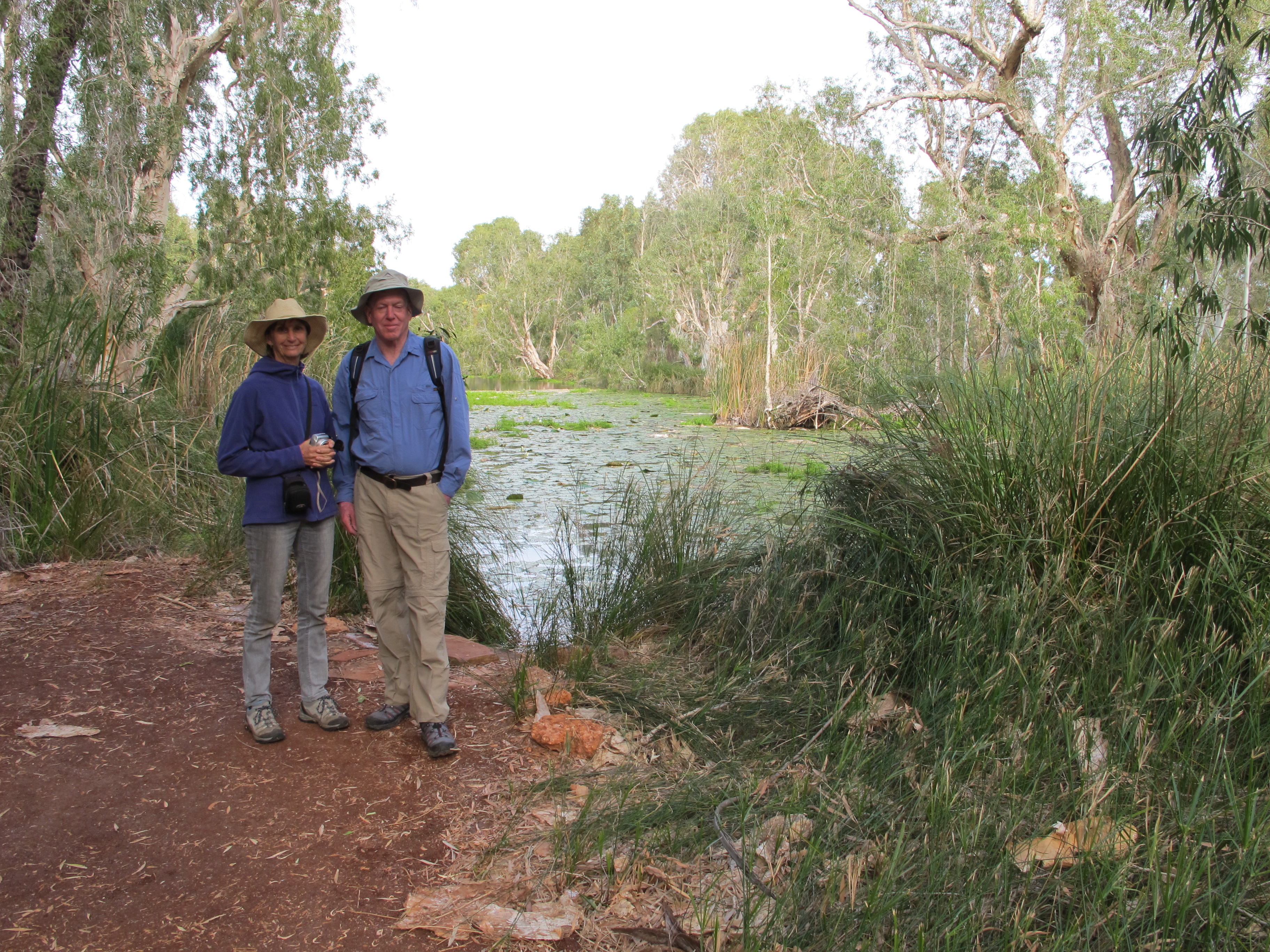
Chris and Les in Millstream National Park
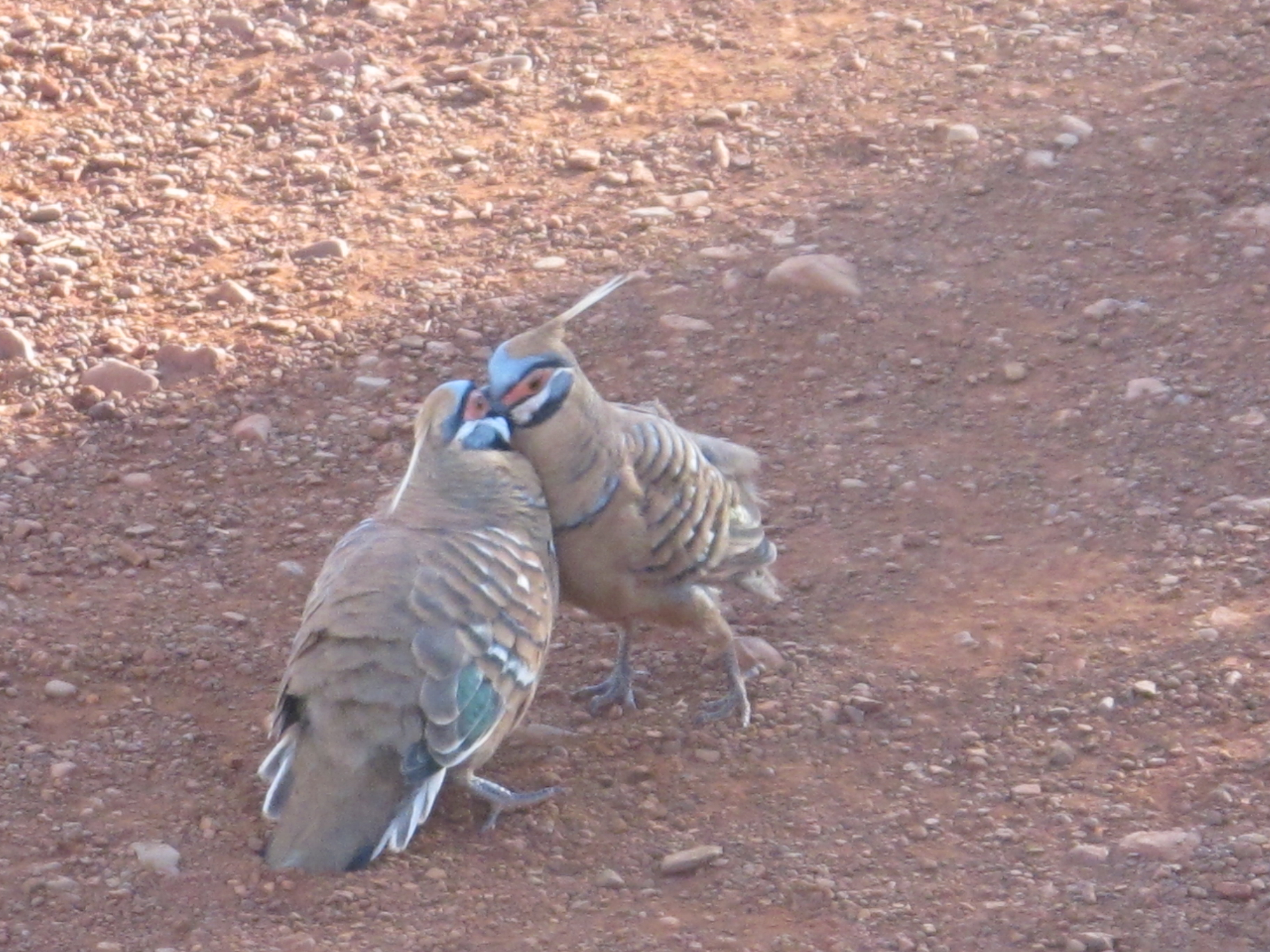
Amorous Spinifex pigeons in Karajini NP
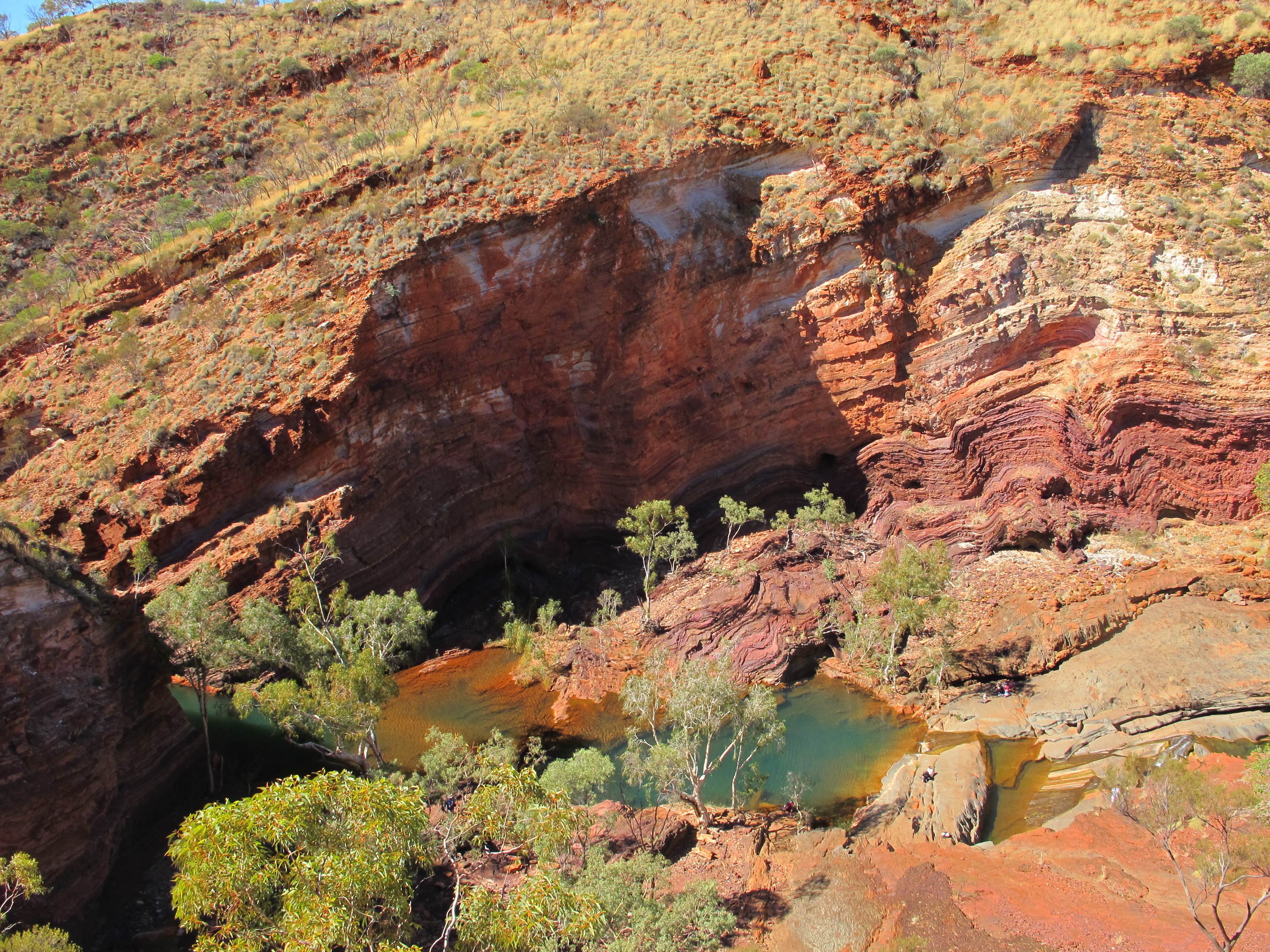
Hamersley Gorge in Karajini NP
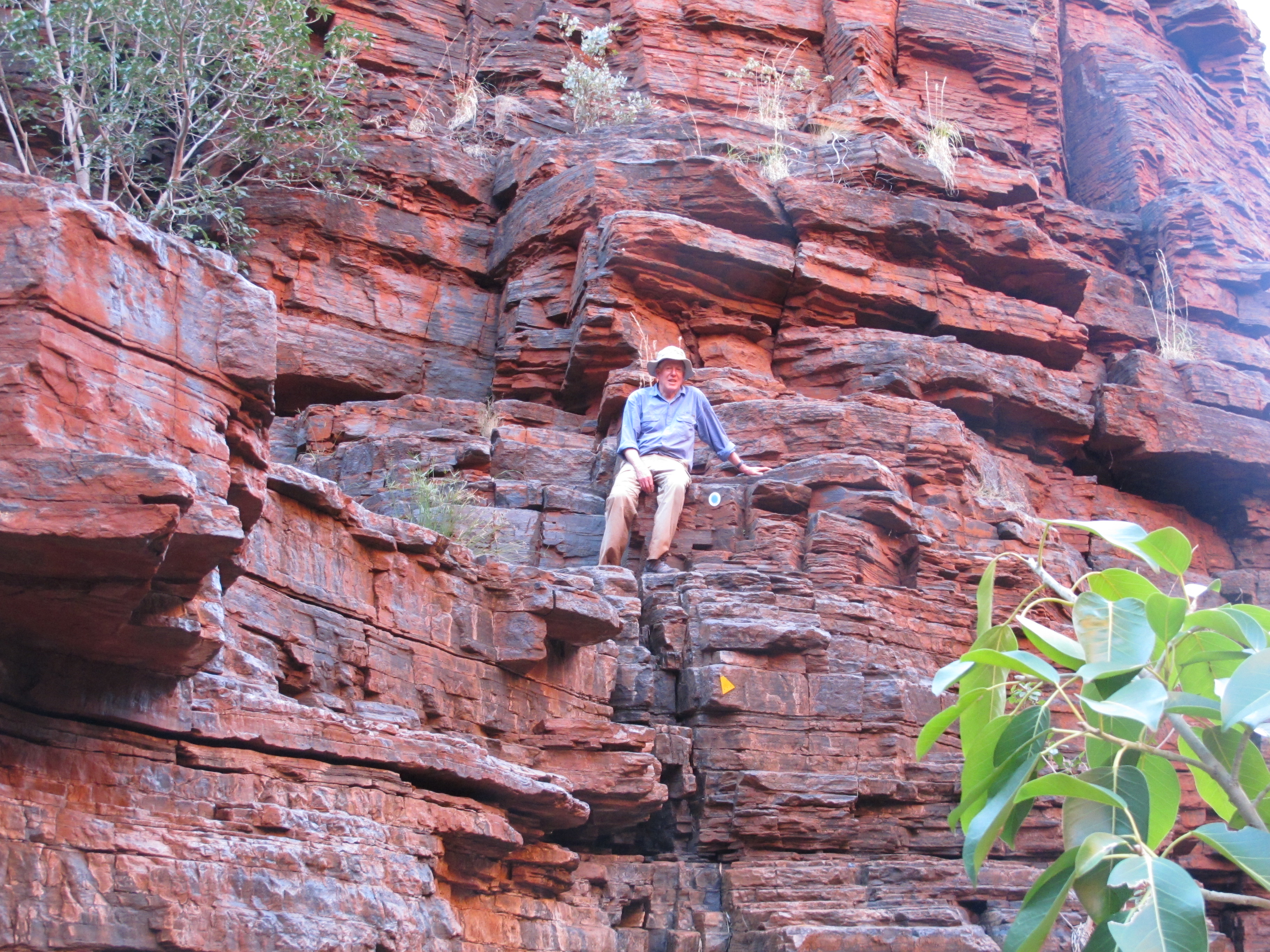
Chris in Karajini Gorge
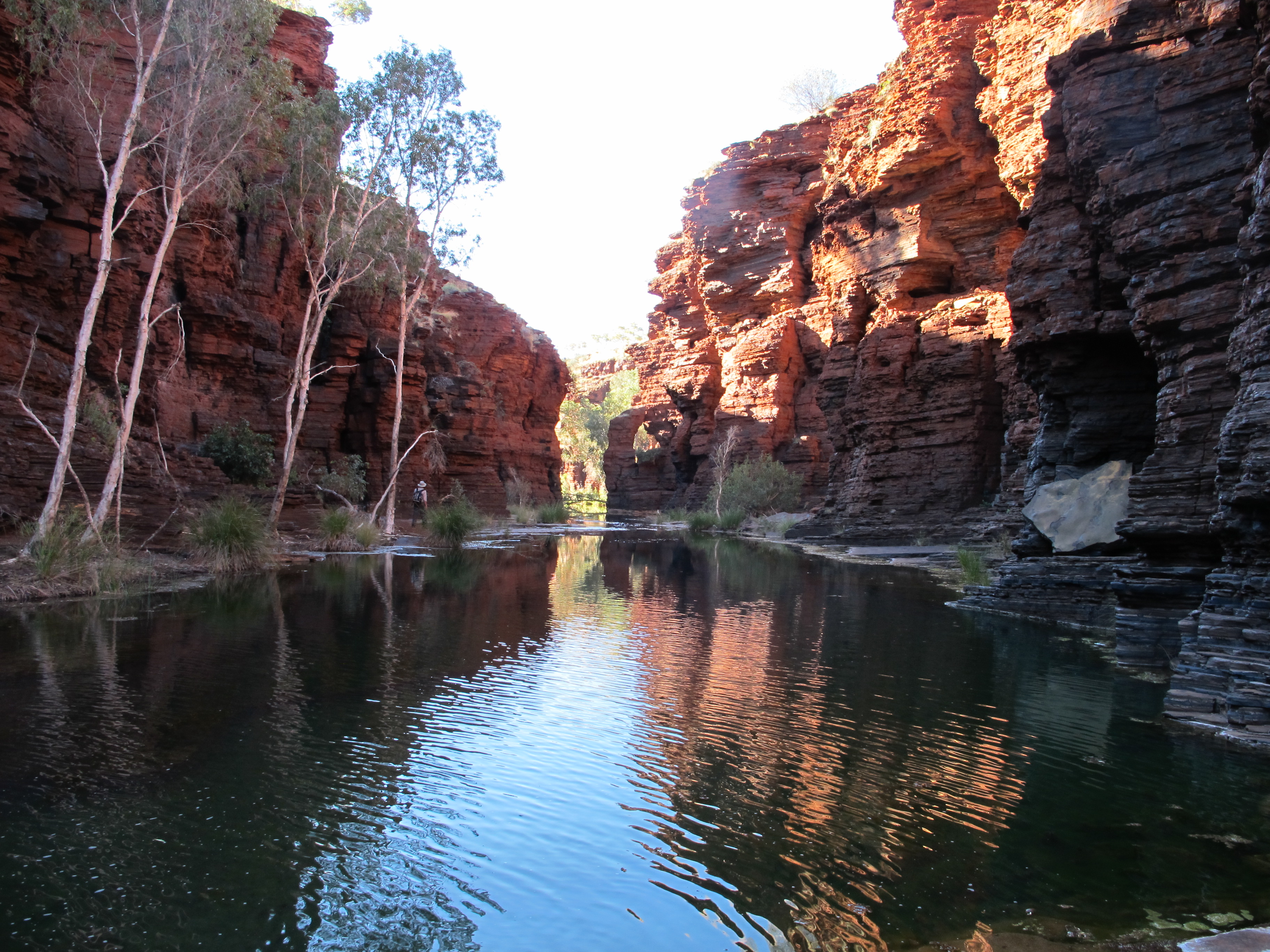
Typical Gorge Scene – Karajini NP
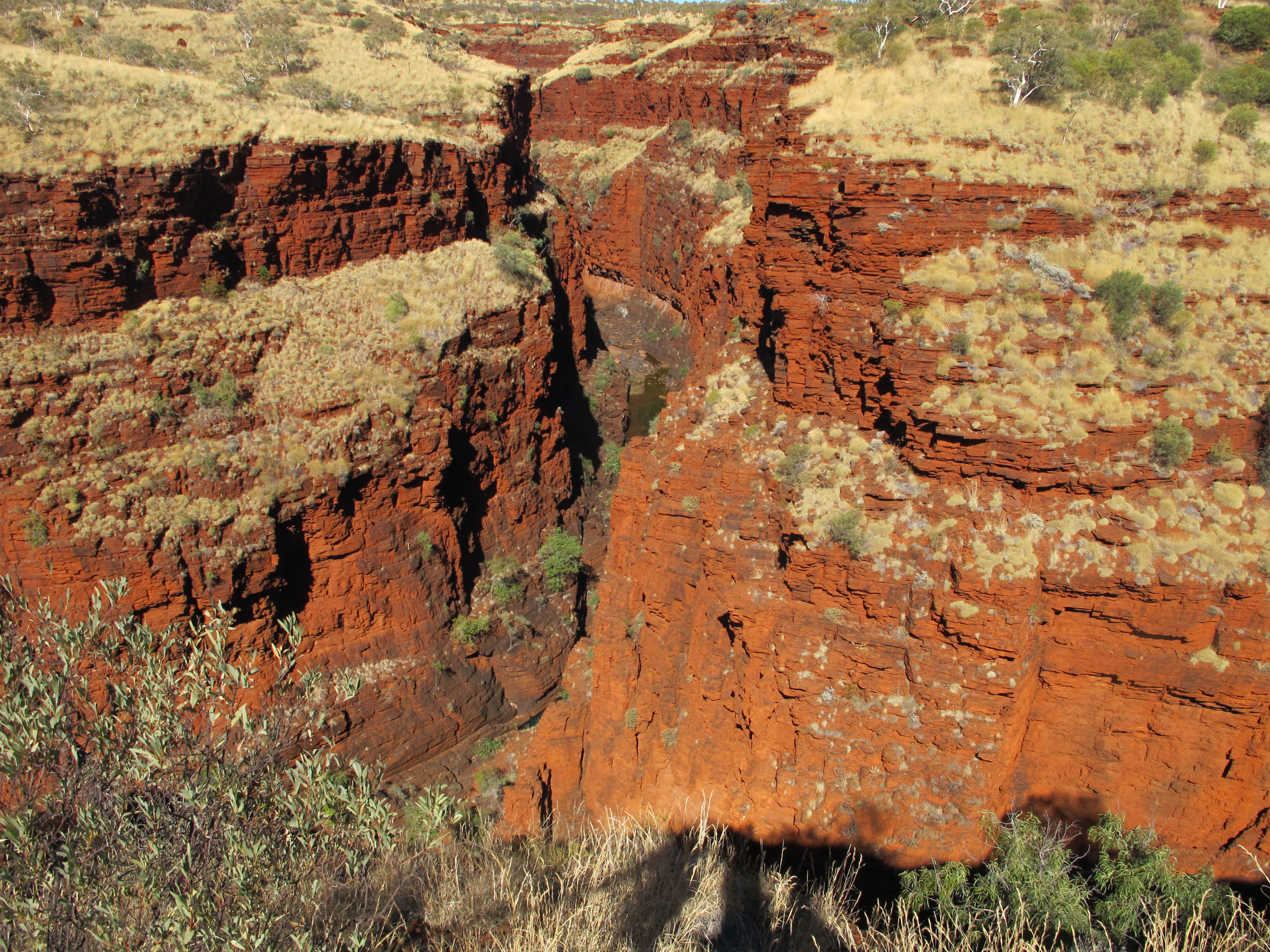
Looking into Knox Gorge
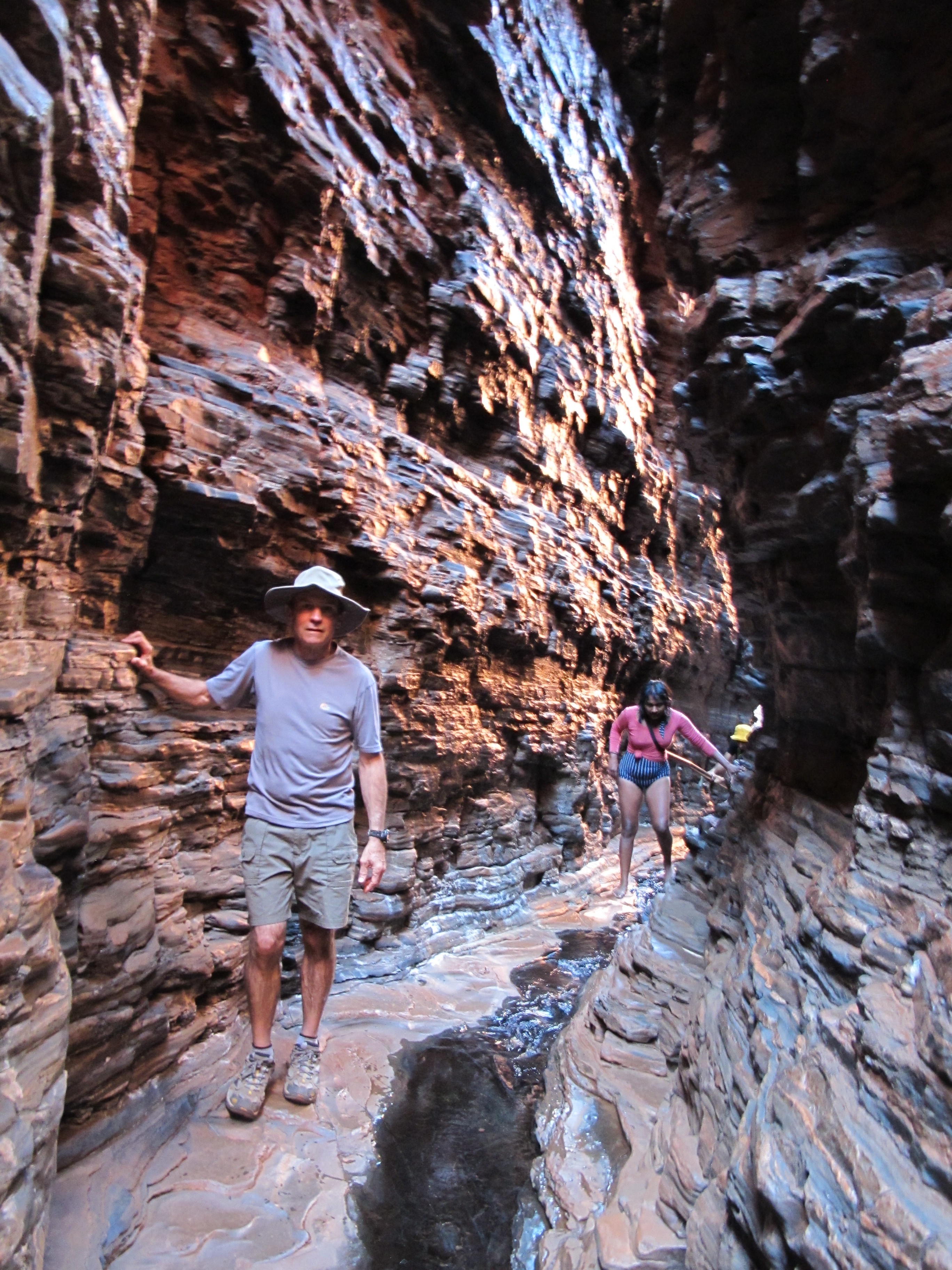
In Weano Gorge…only about a metre wide in places…
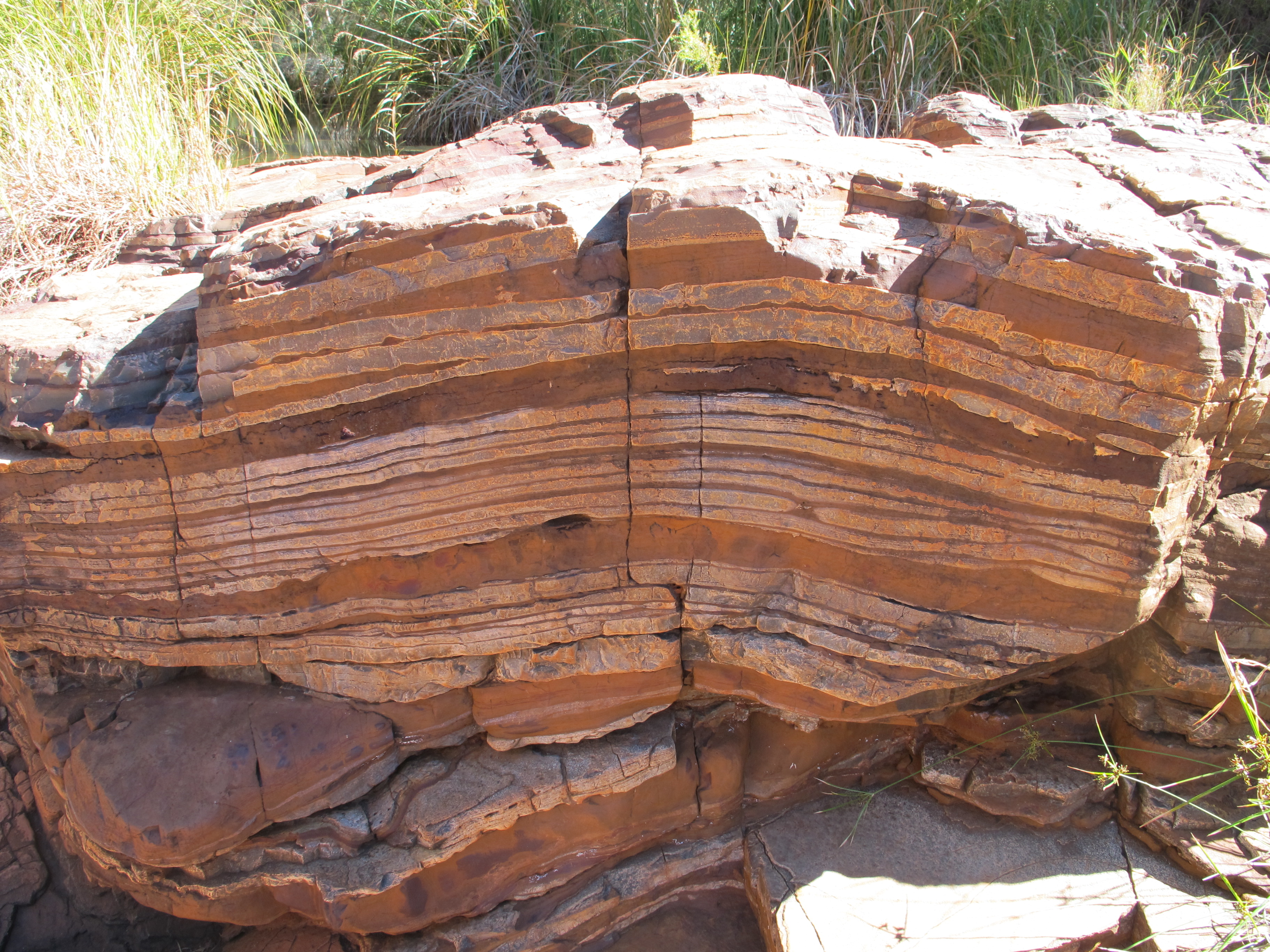
Eons of geological history
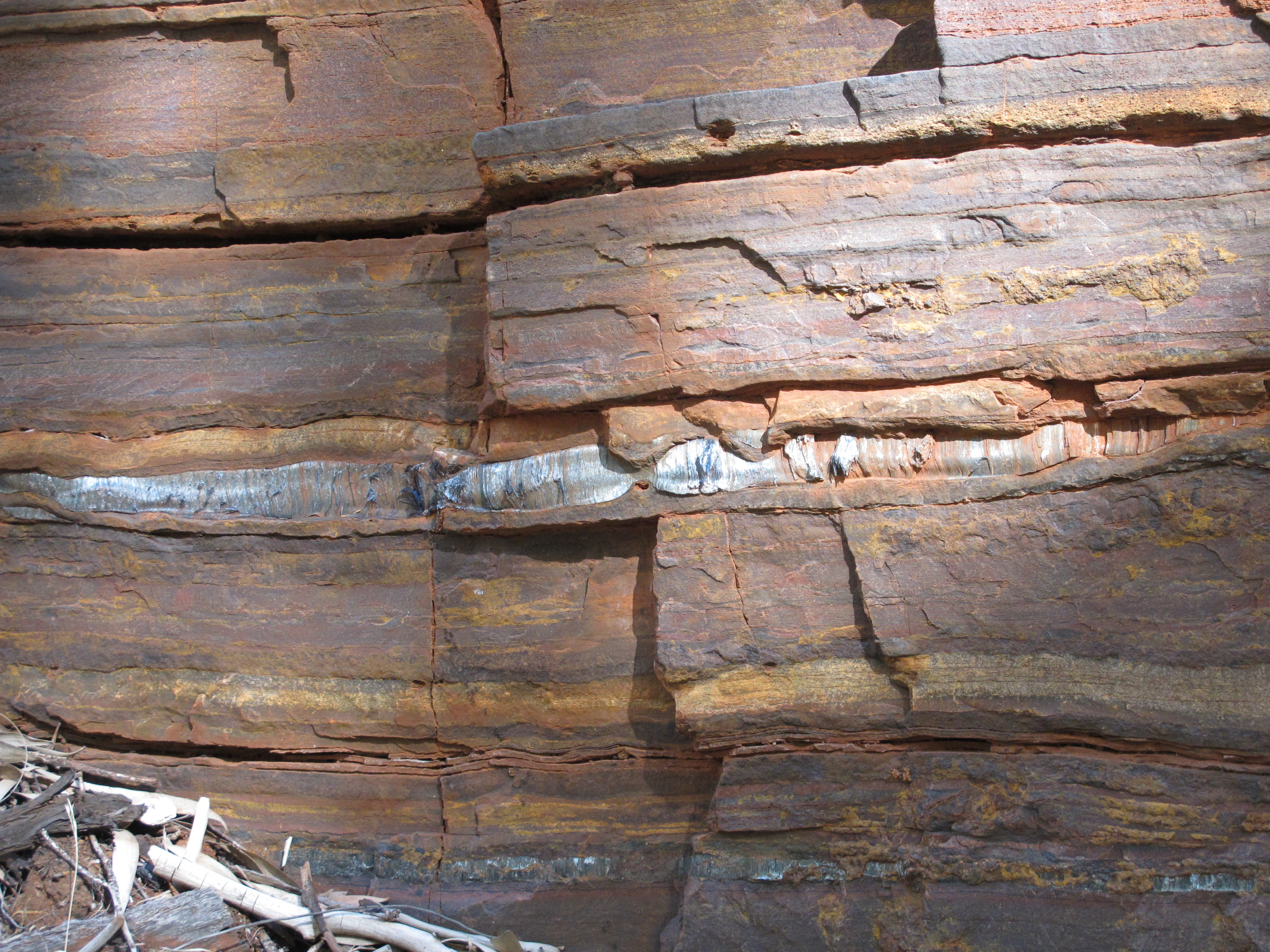
Crocidolite or infamous blue asbestos. Pilbara was the source of Australian asbestos for many years…with a sad legacy of asbestosis for many workers.